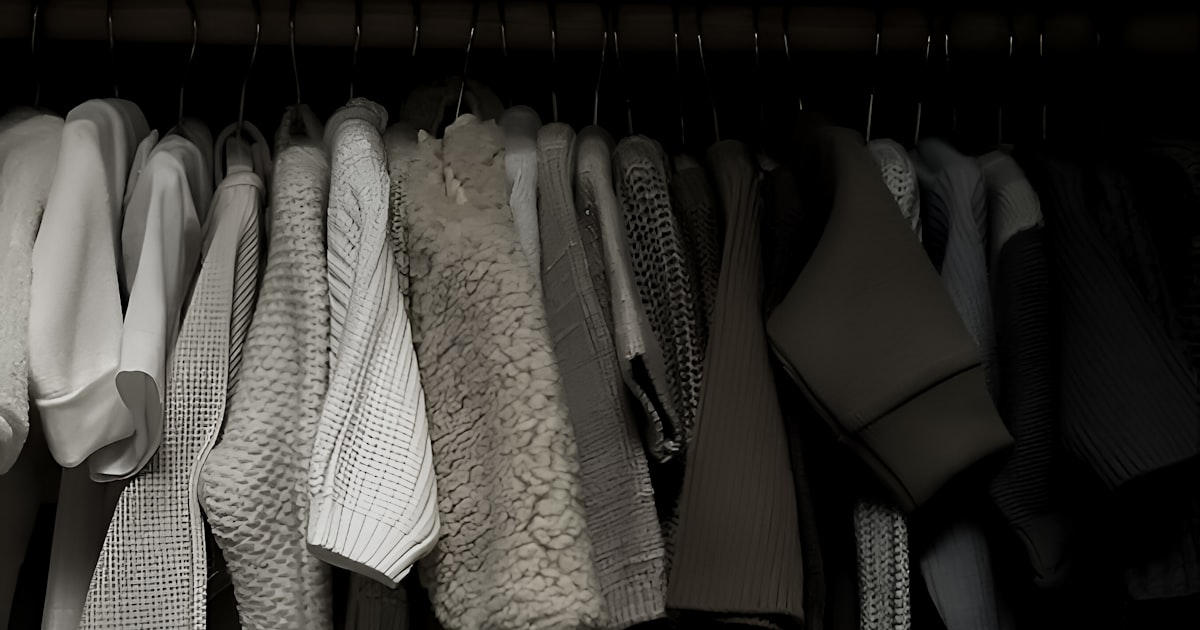
Around late March each year, my closet undergoes a small mutiny. The synthetic blends I bought during cold-weather panic in October start pilling at the elbows, the recycled-polyester midweight gets a strange chemical tang after one warm week, and three tops shed enough microfibres into the laundry filter to fill a tablespoon. The natural-fibre pieces, by contrast, simply look creased and a little softer. That uneven aging, year after year, is what eventually pushed me to rebuild a wardrobe almost entirely from linen, wool, hemp and traceable cotton.
This guide is the practical version of that shift. It covers what to buy first, which fibres handle which seasons, how to read a composition label without being misled by greenwashed marketing, and which brands have published verifiable supply-chain data rather than vague pledges. None of this requires a luxury budget, but it does require treating clothes as durable goods rather than disposable mood boosters.
Why fibre choice matters more than brand
Most sustainability conversations focus on brand identity, packaging or a recycled-content percentage on a hangtag. Fibre composition matters more than any of those, because it determines how a garment ages, washes, sheds microplastics and ends its life. A 2017 study published in Marine Pollution Bulletin found that a single domestic wash of synthetic fleece could release more than 250,000 fibres per garment, while wool and linen shed cellulose fragments that biodegrade within months under standard soil conditions. The choice of fibre, in other words, is a choice about where your clothes go after you stop wearing them.
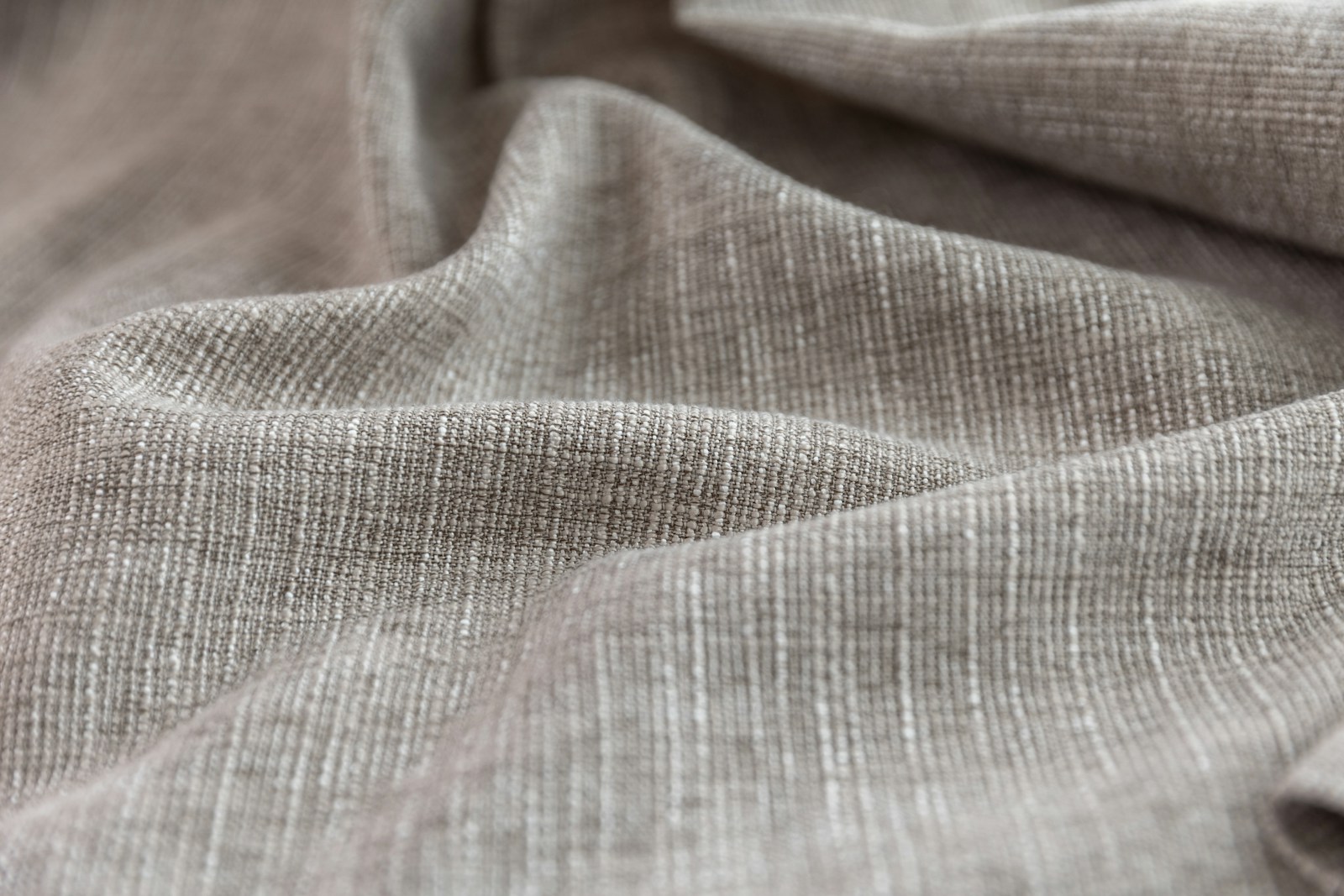
Fibre also dictates thermoregulation. Linen has a hollow cellulose structure that wicks moisture roughly 20 percent faster than cotton, which is why it has been the dominant warm-weather fabric across the Mediterranean for several thousand years. Merino wool retains insulating loft when damp, hemp gets softer with washing rather than weaker, and long-staple cotton (Pima, Sea Island, Egyptian Giza 45) resists pilling because the individual fibres are long enough to spin into smoother yarn.
The four-fibre core: what to actually buy
If you are starting from scratch or paring back, build around four fibres rather than ten. This keeps care routines simple and storage rational.
Linen for spring through early autumn
European flax linen, almost all of it grown in a coastal strip from Caen to Amsterdam, is one of the few fibres that can credibly claim a low-input agricultural footprint. Flax requires no irrigation in that climate band and typically uses about 80 percent less pesticide than conventional cotton, according to the European Confederation of Linen and Hemp. Look for the European Flax certification on labels, which traces fibre back to a registered grower. For a starter wardrobe, three linen pieces handle most of the warm half of the year: a relaxed long-sleeve shirt, drawstring trousers, and an unstructured jacket.
Merino and lambswool for cold weather
A single non-mulesed merino base layer (160 to 200 gsm) and one chunkier lambswool jumper (Shetland or Donegal weights) replace roughly six synthetic equivalents. Wool resists odour because lanolin and the keratin scale structure inhibit bacterial growth, so a merino layer can be worn three or four days between washes, which extends garment life and saves water.
Hemp for utility pieces
Hemp has been the under-recognised workhorse of the natural-fibre wardrobe. It produces roughly twice the fibre per hectare as cotton, tolerates poorer soil, and yields a fabric that softens noticeably after about ten washes. Hemp denim and hemp canvas are ideal for jackets, work trousers and totes. Brands like Patagonia and Jungmaven publish hemp-content percentages on every product page.
Long-staple or organic cotton for the basics
For T-shirts, underwear and sheets, organic long-staple cotton remains the path of least resistance. The Global Organic Textile Standard (GOTS) requires at least 70 percent certified organic fibre and audits the entire processing chain, which makes it the most defensible label currently in mass circulation.
Reading the label without being fooled
Greenwashing on textile labels usually takes one of three forms: vague terms (“eco”, “natural”), unverified internal certifications, or recycled-content percentages that are technically true but irrelevant. A few habits help cut through:
- Look at fibre percentages, not adjectives. “Made with organic cotton” can mean five percent.
- Check for third-party certification numbers. GOTS, OEKO-TEX Standard 100, European Flax and Responsible Wool Standard all publish licence numbers searchable on their websites.
- Be sceptical of recycled polyester for clothes you sweat in. The recycling reduces virgin-plastic demand but does nothing about microfibre shedding during wear and wash.
- Check the country of fabric origin, not just the country of assembly. A garment “made in Portugal” with mystery fabric is a yellow flag.
Brands publishing real supply-chain data
The following brands publish supplier lists, mill addresses or fibre traceability documents that an independent auditor could in principle verify. This is not an endorsement of every product, but a marker that the company has put its sourcing on the public record.
- Asket (Stockholm) publishes a per-garment cost and impact breakdown, including CO2e, water and energy.
- Eileen Fisher runs a take-back programme that has resold or repurposed more than two million garments since 2009.
- Patagonia publishes its Tier 1, 2 and 3 supplier list and discloses recycled, organic and regenerative-cotton percentages for each style.
- Mara Hoffman uses GOTS-certified cotton and publishes annual impact reports verified by a third party.
- Tekla (Copenhagen) sources flax from European Flax-certified spinners and publishes its mill list.

Care: where most natural fibres die prematurely
Roughly 60 percent of the wear-life of a garment is decided after purchase, by how you wash it. Natural fibres tolerate cool washes far better than the heat cycles most machines default to. Wool should be washed in cold water with a wool-specific detergent (mainstream detergents contain proteases that digest the keratin), and dried flat. Linen prefers a 30 degrees Celsius cycle and can be hung damp to skip ironing entirely. Hemp denim ages best when washed inside out, infrequently, on cold.
Repair before replacement
Repair culture has shifted from a marginal hobby to a small but real economic sector. Patagonia‘s Worn Wear team has carried out more than 100,000 repairs in Europe alone since 2017, and several Italian and French cities now subsidise repair vouchers. A small darning kit, a spool of natural-coloured cotton thread, and twenty minutes on YouTube cover most knit holes and seam splits. Visible mending, where the repair is decorative rather than hidden, has its own growing aesthetic and removes the social awkwardness of wearing a repaired piece.
Building the capsule: a sample 25-piece wardrobe
For a temperate European climate, the following capsule covers most adult lives across a year. Quantities, not specific styles, are what matter.
- 3 linen shirts (one white, one navy, one neutral stripe)
- 2 organic cotton T-shirts
- 1 long linen dress or tunic
- 2 merino base layers (one short, one long sleeve)
- 2 lambswool jumpers (one mid-weight, one chunky)
- 1 wool overcoat
- 1 unstructured linen jacket
- 1 hemp denim jacket
- 2 hemp or organic cotton trousers
- 1 pair wool tailored trousers
- 1 natural-fibre raincoat (waxed cotton or undyed canvas)
- 3 pairs of wool or hemp socks
- 5 organic cotton underwear
That is a serious commitment, but cycled correctly, the pieces typically last between five and twelve years. The same wardrobe in synthetics, by my own observation across two decades, lasts about three.
What to do with what you already own
Throwing out an existing synthetic wardrobe is the worst possible move from an environmental standpoint, since it sends salvageable fibre to landfill or incineration. Wear the pieces you have until they fail, then replace them one at a time with natural-fibre equivalents. The Ellen MacArthur Foundation estimates that doubling the average wear life of a garment cuts its emissions footprint by around 44 percent, which dwarfs almost any difference between fibres.
Regional variations: how climate reshapes the four-fibre rule
The capsule above assumes a temperate maritime or continental climate roughly between Lyon and Stockholm. Move the wardrobe and the proportions shift. In hot, humid climates such as the Po Valley summer or coastal Spain, linen and ramie outperform every alternative; merino is reduced to a single travel base layer. In cold-dry climates such as inland Bavaria, the proportion inverts: two or three wool jumpers, a heavy wool overcoat, and lambswool tights replace half of the linen. Hemp performs well almost everywhere, but hemp jersey holds up best in temperate zones because hemp’s natural stiffness softens with humidity exposure.
For tropical and subtropical readers, the practical compromise is usually long-staple cotton with a small linen rotation. Mulesed-free merino loses much of its appeal above 28 degrees Celsius, where the fibre still wicks moisture but feels prickly against humid skin. Bamboo viscose, sometimes marketed as a natural fibre, is technically a regenerated cellulose produced through a chemically intensive process closer to rayon than to cotton; it does not belong in this rotation despite its marketing position.
The cost equation: what natural fibres really demand of a budget
One of the more persistent myths around sustainable fashion is that natural fibres are inherently more expensive. The price difference is real, but smaller than the marketing suggests. A reasonably priced European linen shirt from a brand such as Asket or Tekla currently sits between 90 and 140 euros. A merino base layer from Icebreaker or Smartwool runs 80 to 120 euros. A pair of hemp denim trousers from Patagonia or Jungmaven averages 130 to 160 euros. Compared with fast-fashion equivalents at 25 to 40 euros, the up-front difference is roughly four to one.
The breakdown over a five-year window tells a different story. The British charity WRAP has tracked garment lifespans across major UK retailers since 2012, and its 2024 report on Sustainable Clothing Action Plan participants found that the average synthetic shirt lasted 22 wears before being discarded, while a wool or linen shirt averaged 65 to 80 wears. Spread across that wear count, the cost-per-wear of a 120-euro linen shirt drops to roughly 1.50 euros, against 1.20 to 1.80 euros for the synthetic. The break-even point arrives between year two and year three. After that, the natural-fibre piece is, in real economic terms, less expensive.
For households on tighter budgets, the practical entry points are second-hand wool and linen. The Kilo Shop chain in France, the Beyond Retro outposts across the UK and Sweden, and the Vinted resale platform across most of Europe all carry strong inventories of pure-fibre vintage pieces, often at one-fifth of new prices. A 2025 audit by the Ellen MacArthur Foundation found that 62 percent of pre-1995 wool garments still met first-quality wear standards after light cleaning, against 18 percent of post-2010 polyester blends.
Common misconceptions worth correcting
Several persistent misunderstandings shape how natural-fibre wardrobes are discussed. They are worth flagging because each one redirects attention away from decisions that actually matter.
- “Bamboo is a natural fibre.” Bamboo as a plant is sustainable; bamboo viscose is a chemically processed regenerated cellulose. The OEKO-TEX and GOTS standards both treat it as a synthetic-adjacent fibre.
- “Recycled polyester is environmentally equivalent to natural fibres.” Recycled PET reduces virgin oil demand but introduces no improvement in microfibre shedding, biodegradability or end-of-life pathway. For garments worn close to skin, this remains a meaningful distinction.
- “Wool is unethical because of mulesing.” Mulesing is a real welfare concern in some Australian flocks. New Zealand merino, ZQ-certified Australian wool, and most European wool are mulesing-free, and the Responsible Wool Standard publishes farm-level audit reports.
- “Linen wrinkles, so it looks unprofessional.” Linen wrinkles are a fibre property, not a flaw, and most professional environments outside conservative legal and financial contexts have adapted. The garment industry’s anti-wrinkle finishes typically use formaldehyde-derived resins, which is a worse trade-off than the wrinkles.
- “Organic cotton uses too much water.” Cotton’s water footprint is high in any system, but the Textile Exchange’s 2025 Materials Market Report shows organic cotton uses 91 percent less blue water than conventional cotton because rain-fed cultivation is dominant in organic certification.
A practical rebuild timeline
For readers who want to migrate the existing wardrobe over a realistic period, an 18 to 24 month replacement window keeps spending manageable. In the first three months, identify the five most-worn pieces and replace them as they fail. Months four to nine cover seasonal layers — usually a wool jumper, a linen shirt, hemp trousers. Months ten to eighteen rotate in outerwear and the heavier pieces, which carry the highest per-item cost but the longest expected wear life. The Ellen MacArthur Foundation’s circular economy framework describes this as a “linear-to-circular drawdown,” and small-budget households tend to find it less painful than a single replacement event.
The seasonal storage question
For natural-fibre wardrobes that follow seasonal rotation, proper off-season storage substantially extends garment lifespan. Wool and silk in particular benefit from careful winter or summer storage practices that protect against moth damage, light degradation and humidity-related issues. The 2019 study by Italian textile conservation researchers at the University of Florence found that wool garments stored in cedar-lined containers with lavender sachets retained substantially better condition over five-year storage periods than identically aged wool stored in conventional plastic containers or cardboard boxes.
The practical storage protocol that works across most natural fibres includes thorough cleaning before storage (residual body oils and food traces attract moths), folding rather than hanging for knitwear (hanging stretches the fibres), cedar wood blocks or lavender sachets as natural moth deterrents (more effective than chemical mothballs and without the residue), breathable cotton or linen storage bags rather than plastic (which traps humidity), and storage at moderate temperature in dark dry conditions. Cardboard boxes work well for short-term storage; for longer storage, archival-quality acid-free boxes prevent gradual fibre degradation.
What to do with worn-out natural fibres
The end-of-life pathway for natural fibre garments is one of the more underappreciated advantages of the category. Cotton, linen, hemp and wool all biodegrade in soil under aerobic conditions, with most natural fibre garments fully decomposing within 6 to 24 months when buried in active garden soil. The same garment in landfill conditions decomposes more slowly because of compaction and anaerobic conditions, but still substantially faster than synthetic alternatives.
For garments worn beyond repair, several practical disposal pathways exist. Cotton and linen can be cut into rags for cleaning use, then composted when the rags themselves wear out. Wool can similarly be reused as garden mulch (which both biodegrades and provides slow nutrient release as the wool decomposes). The American Sheep Industry Association has documented several agricultural uses for end-of-life wool that may not be widely known to consumers but represent legitimate disposal pathways.
For garments that retain some structural integrity, several specialist take-back programmes accept natural fibre items for recycling into new fabric or alternative uses. The Eileen Fisher Renew programme has resold or repurposed more than two million garments since its 2009 founding, with substantial work in fibre-to-fibre recycling for natural materials. The Patagonia Worn Wear programme similarly accepts returned garments for repair, resale or component recycling. Several smaller specialist recyclers including the Italian Aquafil ECONYL programme handle natural fibre processing alongside their better-known synthetic recycling work.
Where to learn more
For deeper reading, the Wikipedia entry on sustainable fashion is a reasonable map of the field, while the European Commission has begun publishing the Strategy for Sustainable and Circular Textiles, which will reshape labelling rules across the EU through 2030. The Textile Exchange publishes annual fibre market reports that track production volumes, certification uptake and traceability. For brand-level work, our notes on ethical brands and fabric innovation trace specific case studies, and our archive on textile care covers laundering and storage in more depth.
This article is for informational purposes and reflects personal experience and publicly available reporting; verify certifications and brand claims directly before purchasing.